

Choosing the right seating for your workspace can feel like an overwhelming task. Whether you are outfitting a bustling corporate headquarters, a high-tech laboratory, a busy workshop, or a dedicated home office, the furniture you select directly influences daily comfort, health, and productivity.
When browsing for seating solutions, you will quickly notice a distinct division between standard office furniture and heavy-duty alternatives. But don't worry! In short, understanding the unique demands of your environment will make your decision straightforward.
Before diving into the specifics, let's explore what separates standard office furniture from heavy-duty alternatives and how to determine which option is best suited for your team.
Step 1: Understanding Ergonomic Office Chairs
For general administrative tasks, computer work, and corporate environments, ergonomic office chairs are the gold standard. These chairs are engineered to support natural spinal alignment, reduce fatigue, and keep employees comfortable throughout the working day.
When you invest in quality office chairs, you are prioritizing adaptability and posture support. Typical features include:
- Adjustable Seat Height and Depth: Allowing your feet to rest flat on the floor while maintaining proper thigh support.
- Contoured Backrests with Lumbar Support: Designed to cradle the lower back and prevent slouching or strain.
- Adjustable Armrests: Helping to relieve tension in your shoulders and neck while typing or writing.
- Tilt and Recline Mechanisms: Encouraging micro-movements to keep circulation flowing.
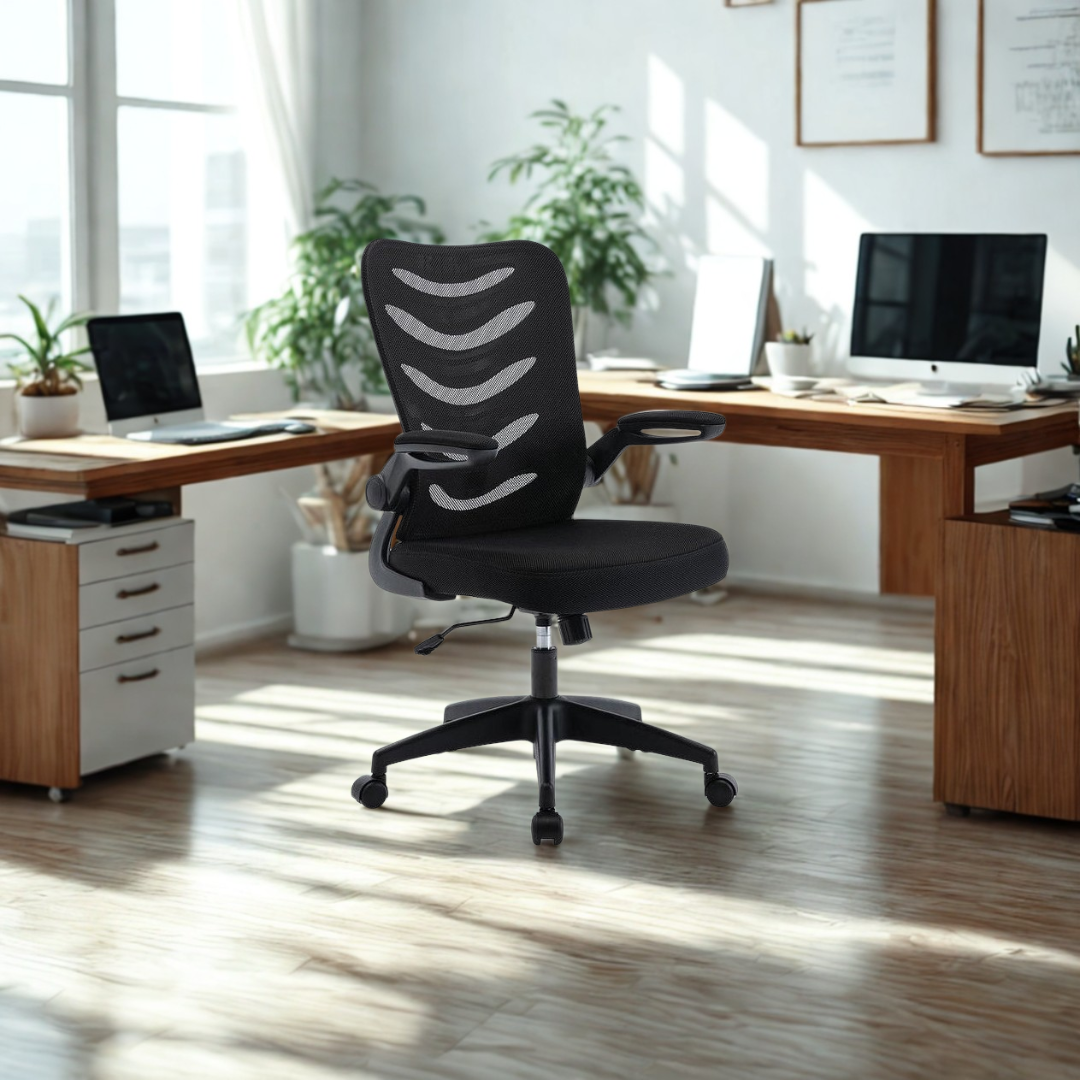
While these chairs excel in climate-controlled, desk-bound environments, they are typically not designed to withstand the rigors of aggressive industrial settings, chemical exposure, or rough workshop floors.
Step 2: Exploring Industrial Seating and Factory Standards
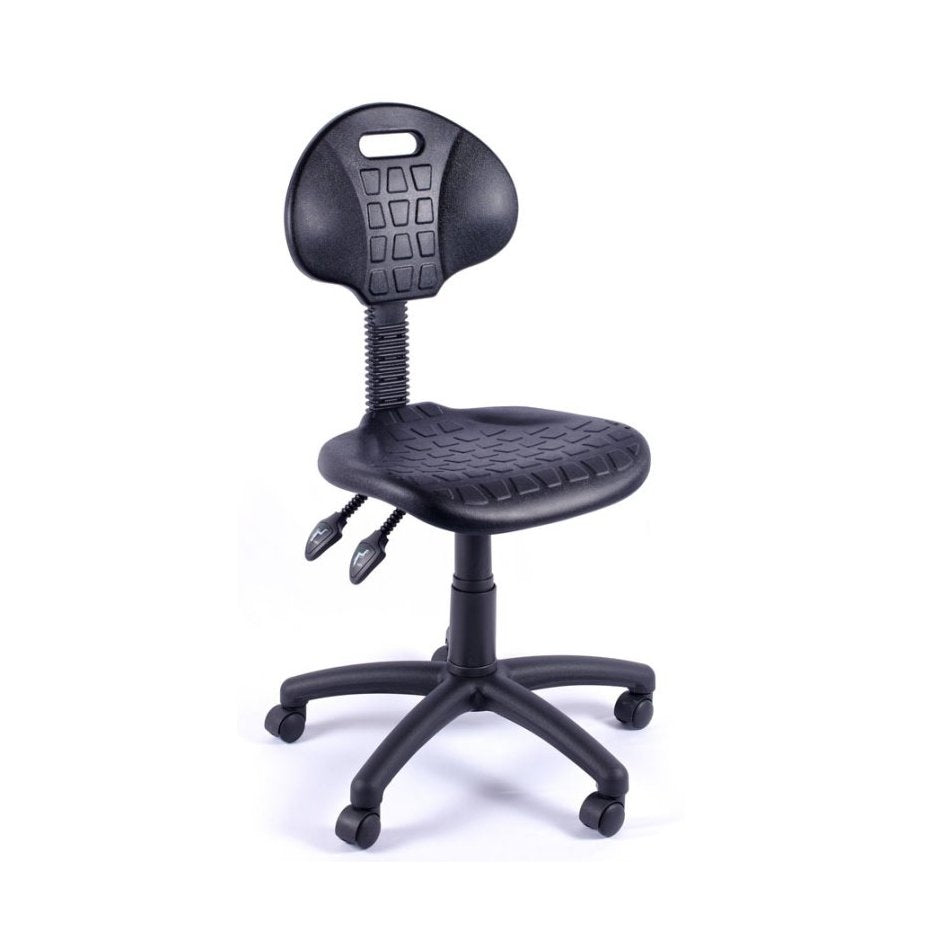
That being said, if your workplace involves manufacturing lines, assembly benches, technical laboratories, or active workshops, standard office furniture simply won't cut it. This is where specialized industrial seating becomes essential.
Industrial environments demand a different level of resilience. According to occupational health guidelines, furniture in these settings must endure demanding duty cycles, mechanical wear, and potential exposure to oils, dust, and solvents.
Key attributes of industrial seating include:
- Heavy-Duty Construction: Built with robust steel frames, impact-resistant polymers, and reinforced mechanisms to handle intensive daily use.
- Easy-to-Clean Surfaces: Upholstered in durable polyurethane or wipe-clean materials that resist moisture and chemicals.
- Specialised Safety Options: Including anti-static (ESD chairs) configurations designed to protect sensitive electronic equipment from electrostatic discharge.
- Enhanced Stability: Fitted with non-slip bases or heavy-duty glides rather than standard office casters where floor traction is paramount.
If your team operates in a setting where durability and safety take precedence over plush executive padding, exploring dedicated factory and lab chairs is the right move.
Step 3: Where Draughtsman Chairs Fit In
One of the most common questions workspace managers ask is: Where do high workstations fit into this equation? Whether you are working at an architectural drafting board, a high laboratory bench, or a raised assembly counter, standard desk chairs leave you sitting too low.
This is where draughtsman chairs come into their own. A draughtsman chair is essentially a tall ergonomic task chair equipped with an extended gas lift cylinder and an integrated foot ring.
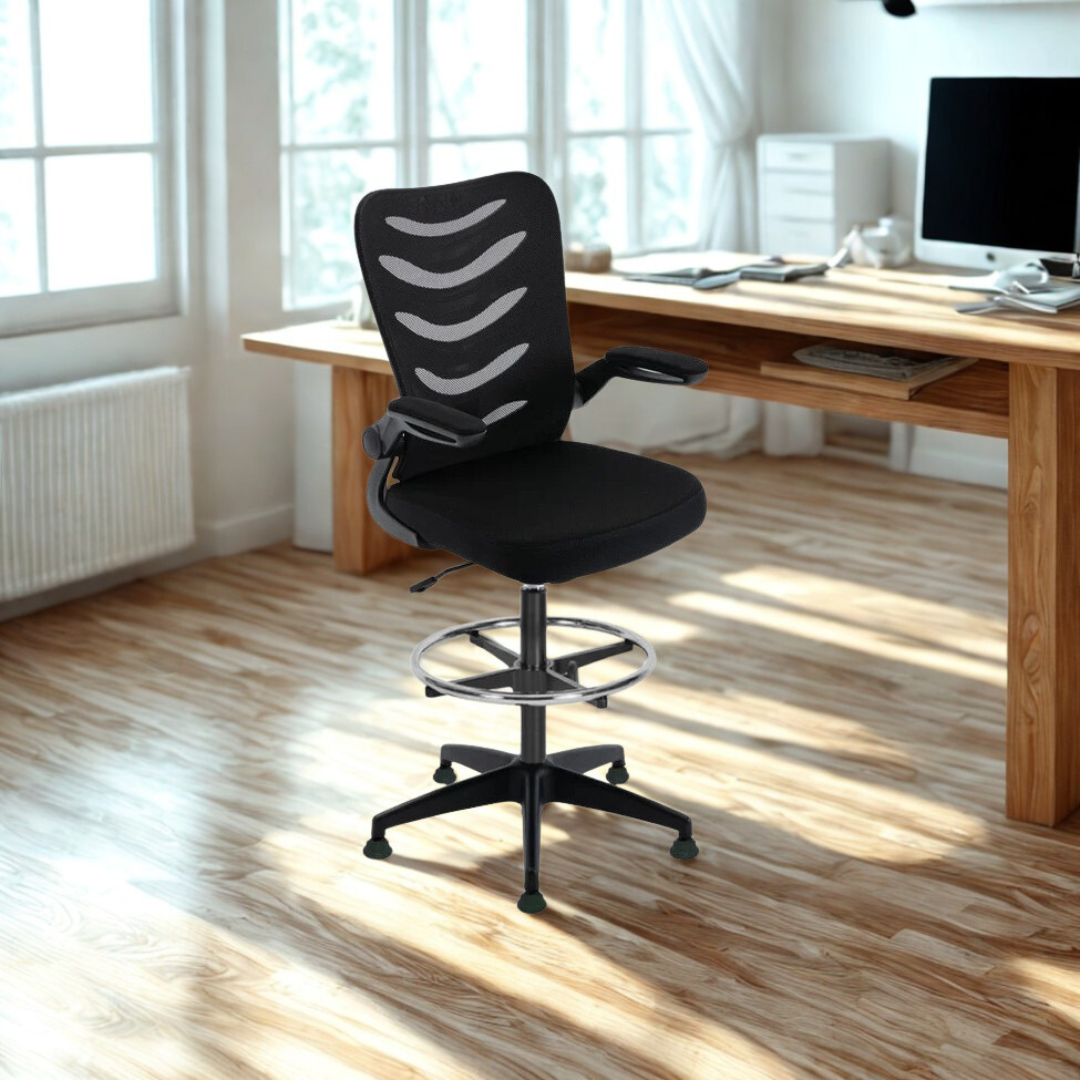
Key benefits of draughtsman chairs include:
- Elevated Height Range: Perfectly tailored for high desks and counters where standard chairs fail to provide adequate eye-level alignment.
- Integrated Foot Support: A sturdy foot ring ensures your legs remain properly supported, preventing dangling and promoting healthy circulation.
- Versatile Build Quality: Available in both office-grade fabrics for studios and robust industrial finishes for laboratories.
If your daily tasks require you to alternate between seated work at elevated surfaces and standing oversight, browsing our collection of draughtsman chairs will reveal models designed specifically for this posture requirement.
Step 4: Key Differences at a Glance
To summarize how these categories compare, consider the following breakdown of build quality, ergonomics, and application:
| Feature / Consideration | Ergonomic Office Chairs | Industrial Seating | Draughtsman Chairs |
|---|---|---|---|
| Primary Environment | Offices, home workstations, meeting rooms | Factories, workshops, laboratories, warehouses | High benches, labs, design studios, raised counters |
| Main Design Goal | Posture support, comfort, and aesthetic appeal during desk work | Maximum durability, chemical/impact resistance, and safety | Ergonomic support at elevated working heights |
| Build Materials | Breathable mesh, soft fabrics, standard plastics, and foam | Moulded polyurethane, heavy-duty steel, wipe-clean surfaces | Tall gas lifts, reinforced bases, and integrated foot rings |
| Special Adaptations | Multi-adjustable armrests, sync-tilt mechanisms, lumbar systems | Anti-static (ESD) protection, slip-resistant bases, extreme wear resistance | Extended height cylinders, sturdy foot rests |
Step 5: How to Choose the Right Seating for Your Workplace
Once you know what you need, making the final selection comes down to matching the chair directly to the user's daily routine and physical environment.
Here is a simple framework to guide your decision:
- Evaluate the Worksurface Height: If your desk is standard height (around 70–75cm), stick with standard ergonomic office chairs. If your work surface is elevated (90cm+), look at draughtsman chairs.
- Assess Environmental Hazards: Will the chair be exposed to dust, oils, static electricity, or heavy foot traffic? If yes, industrial or ESD-safe seating is a must.
- Prioritise User Comfort: Never compromise on adjustability. Even in heavy-duty workshop settings, proper lumbar support and height adjustment prevent cumulative musculoskeletal strain.
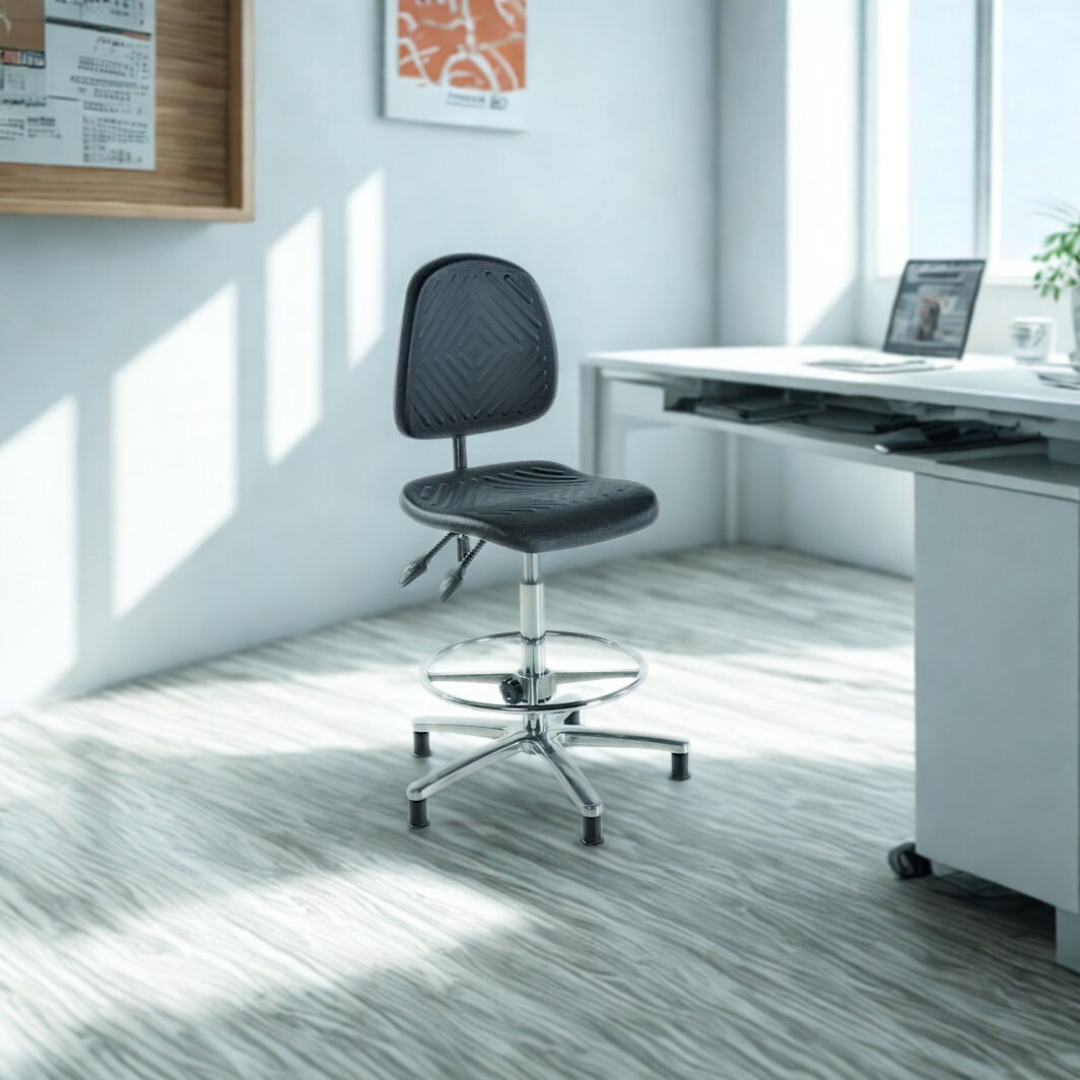
By embracing a "best of both worlds" perspective: combining high-performance ergonomics with environment-specific durability: you ensure that every member of your team is properly supported, no matter where their workstation is located.
Conclusion
Selecting between standard office seating and industrial alternatives doesn't have to be complicated. By carefully assessing your environment: whether it's a sleek corporate office, a rigorous laboratory, or an elevated workshop bench: you can invest in furniture that protects long-term health, enhances daily productivity, and withstands the demands of your daily operations.
Taking the time to choose the correct specification pays dividends in comfort, safety, and overall workplace satisfaction for years to come.