

Choosing the right chair can feel surprisingly difficult. A standard office chair may look comfortable, but will it cope with a laboratory bench? A rugged industrial chair may be durable, but is it the best option for eight hours of computer work?
The answer depends on more than appearance. You need to consider your working environment, desk or worktop height, daily tasks, cleaning requirements and the level of adjustment each user needs.
In this guide, we compare industrial seating with ergonomic office chairs and explain which option is most suitable for corporate offices, laboratories, factories and home offices.
Industrial Seating vs Ergonomic Office Chairs: What Is the Difference?
Both chair types can support good posture, but they are designed with different priorities in mind.
Ergonomic office chairs are primarily designed for seated desk work. They typically focus on:
- Adjustable seat height
- Lumbar and back support
- Seat tilt and recline
- Adjustable armrests
- Comfortable cushioning or breathable mesh
- Easy movement around a standard desk
Industrial seating is designed for more demanding environments, such as factories, workshops and laboratories. Depending on the model, it may offer:
- Durable polyurethane, vinyl or technical upholstery
- Easy-clean surfaces
- Higher seat-height adjustment
- Foot rings for elevated workstations
- Stable glides or task-specific castors
- ESD-safe or antistatic options
- Robust components for frequent workplace use
That being said, the categories can overlap. Some draughtsman chairs provide excellent ergonomic adjustment, while some office chairs use durable, easy-clean materials. The best choice is the chair that matches the real conditions of your workstation.
Why Ergonomics Matters in Every Environment
Before diving into the specifics, it is worth remembering that comfort is not simply a luxury. Poorly adjusted seating can encourage awkward posture, discomfort and unnecessary fatigue. Over time, this may affect concentration, wellbeing and productivity.
The Canadian Centre for Occupational Health and Safety’s guidance on office chairs highlights the importance of adjustability and explains that one chair cannot suit every person or task.
A well-matched chair should help you:
- Keep your feet supported on the floor or a foot ring
- Position your elbows comfortably near the work surface
- Maintain a neutral, supported back position
- Move and reach without excessive twisting
- Change posture throughout the working day
- Reduce pressure behind the knees
The chair is only one part of the solution. Your desk height, monitor position, lighting and working habits all contribute to a healthier workstation.
When Ergonomic Office Chairs Are the Better Choice
Corporate Offices and Computer Workstations
For traditional desk-based work, ergonomic office chairs are usually the most suitable option. Employees may spend much of the day typing, using a mouse, reading documents or attending video meetings. These tasks benefit from fine adjustments that allow each person to set up the chair around their own body.
Look for:
- A seat-height range that works with the desk
- A supportive backrest
- Adjustable lumbar or back height where available
- A seat that supports you without pressing into the backs of your knees
- Armrests that allow your shoulders to relax
- A tilt or recline function for comfortable posture changes
- A suitable warranty and usage rating
For example, the Chelsea Office Chair combines a high back, height-adjustable arms, a two-lever mechanism and a permanent contact back. Its seat height ranges from 475mm to 610mm, making it suitable for a variety of standard desk setups. It also has a five-year parts and components guarantee.
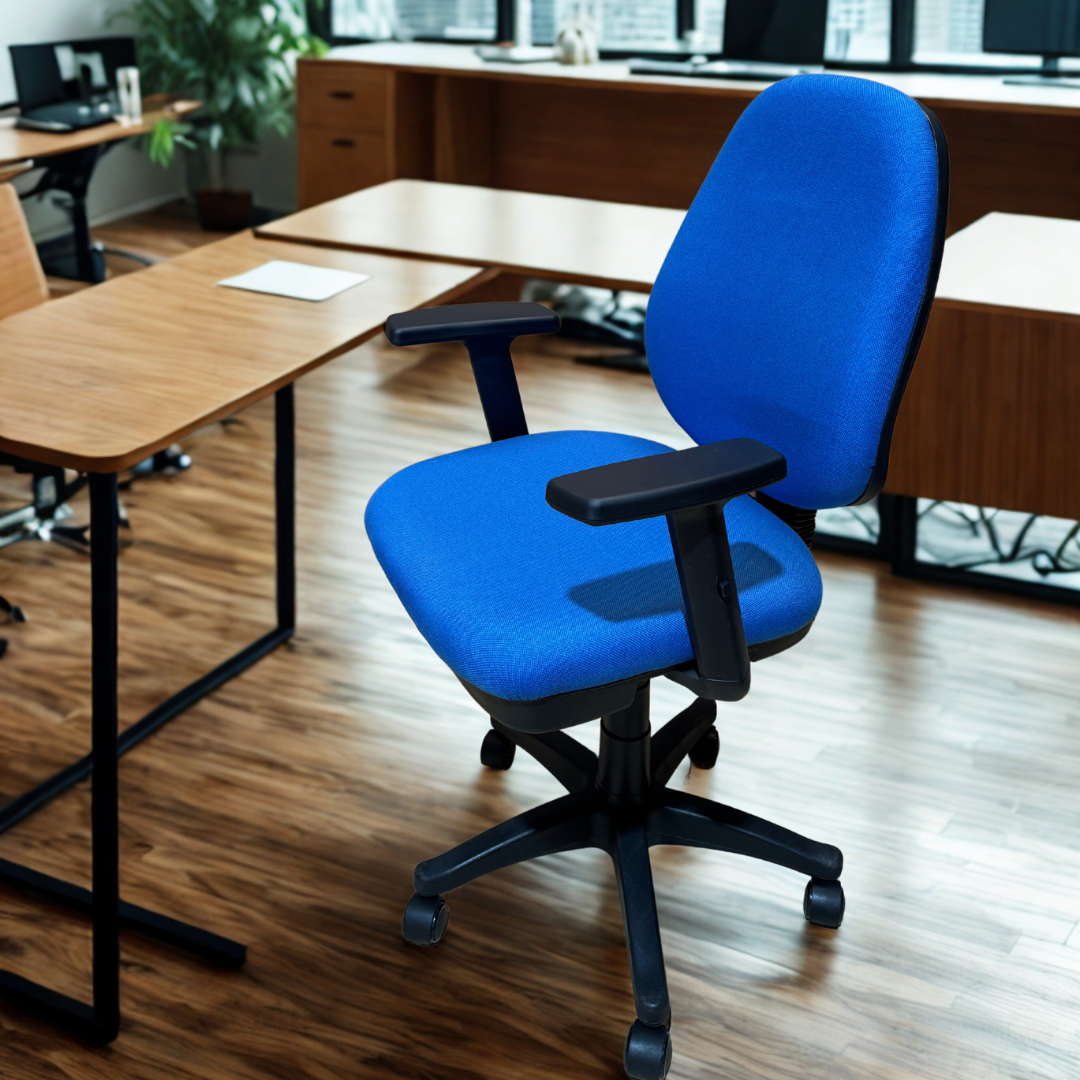
A premium chair with extensive adjustment can be a sensible investment in a busy corporate environment. However, you do not always need the most expensive model. A well-designed, budget-friendly office chair can still provide effective support if it fits the user and is adjusted correctly.
Home Offices and Remote Working
Working from home can make it tempting to use a dining chair, occasional chair or decorative seat. This may be acceptable for a short period, but it can quickly become uncomfortable if you work remotely every day.
For regular home working, prioritise:
- A properly supported back
- Sufficient seat cushioning
- A stable five-star base
- Quiet castors if you move around hard floors
- A design that fits your available space
- Adjustability that suits your body rather than just your budget
The Chilli Seating office chair collection includes compact mesh chairs, cushioned high-back chairs and more adjustable models. This gives you the flexibility to choose a chair that suits both your working hours and your home interior.
In short, a simple ergonomic chair is usually a better long-term choice than an attractive but poorly supportive chair.
When Industrial Seating Is the Better Choice
Laboratories and Technical Work Areas
Laboratories often require a different approach from a conventional office. You may work at a raised bench, use instruments, handle materials or clean the workstation frequently. In these settings, a soft fabric office chair may not be practical.
A suitable laboratory chair may need:
- A greater seat-height range
- A foot ring to support your feet at a high bench
- Smooth, easy-clean upholstery
- A stable base
- Optional glides or task-specific castors
- ESD or antistatic properties where required
- Adjustable back support for extended seated work
The Lab Space – Mist 2 Mesh Back Draughtsman Chair has a seat-height range of 540mm to 800mm, a 14-inch gas lift and an adjustable foot ring. It also includes a high back and two-lever mechanism, with options for seat tilt, seat slide and adjustable arms.
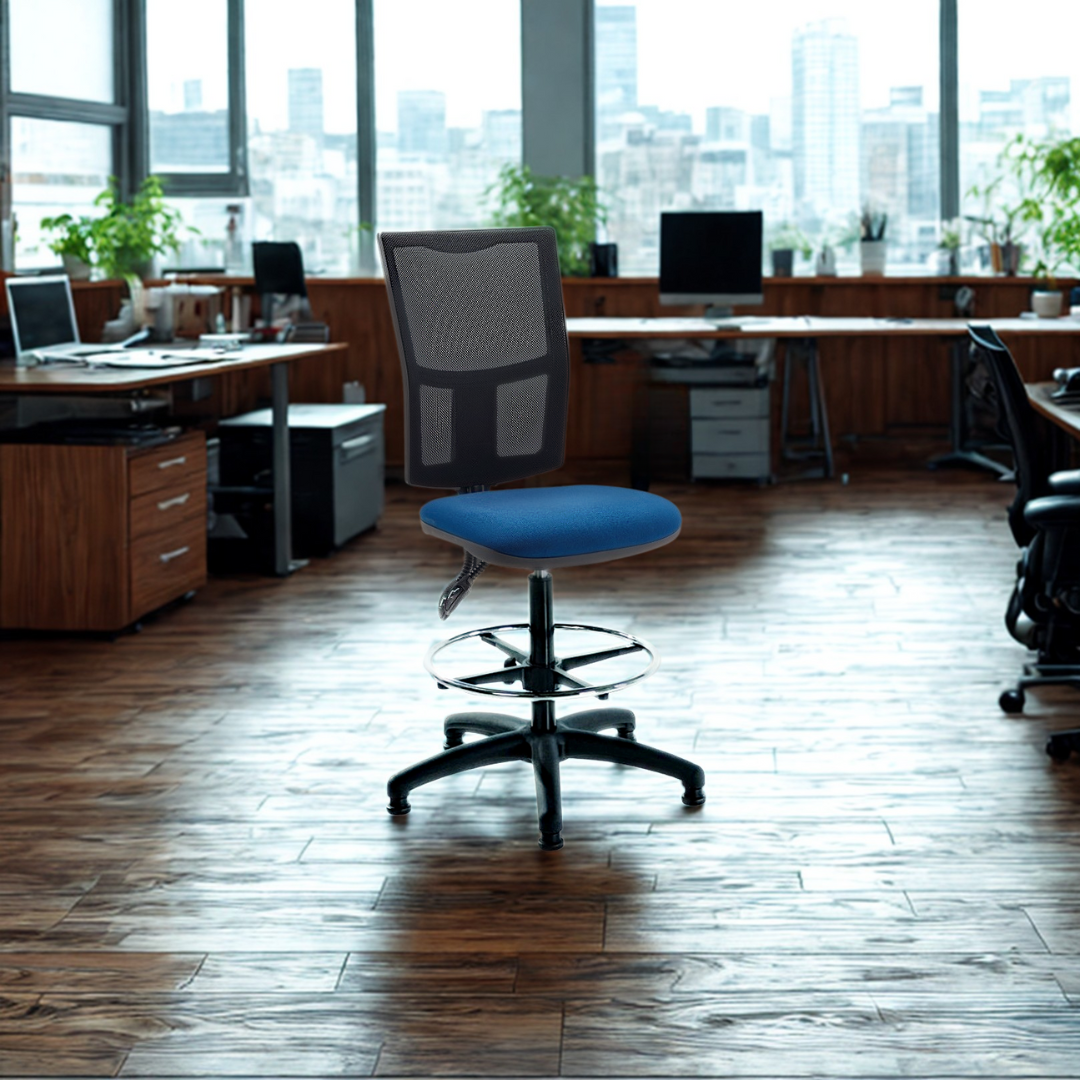
This type of chair can be useful at laboratory benches, counters, reception points and elevated technical workstations. However, always check the exact product specification before buying, particularly if your environment requires ESD compliance, chemical resistance or cleanroom suitability.
If employees alternate between bench work and computer work, using two different seating types may be the most practical solution: industrial seating at the bench and ergonomic office chairs at standard-height desks.
Factories, Workshops and Production Areas
Factories and workshops present additional challenges. Chairs may be exposed to dust, oils, dirt, frequent cleaning or accidental impacts. Workers may also need to sit at machinery, assembly stations or worktops that are higher than a standard office desk.
In these conditions, the materials and base design matter just as much as the cushioning.
Polyurethane and vinyl seating can be easier to wipe clean than conventional fabric. Depending on the model, industrial chairs may also provide a stronger working platform and a foot ring for elevated tasks.

The factory and lab chair collection includes polyurethane, vinyl, fabric and ESD seating options. For example, the range includes dedicated ESD polyurethane draughtsman chairs for work areas where managing static electricity is important.
Do not assume that every industrial chair has the same resistance, certification or usage rating. Identify the hazards first, then select a product specifically designed for those conditions.
What Are Draughtsman Chairs?
Draughtsman chairs are taller task chairs designed for high desks, counters, worktops and laboratory benches. They usually include a raised gas lift and a foot ring, helping you work at an elevated surface without leaving your legs unsupported.
They can be suitable for:
- Laboratories
- Workshops
- Reception counters
- Drawing and design stations
- Technical worktops
- Sit-stand or raised desks
- Manufacturing and inspection areas
The Flexi-Mesh Draughtsman Chair is one example. It features a breathable mesh back, adjustable arms, a three-lever mechanism and a seat-height range of 570mm to 800mm. A seat slide option is also available for users who need more control over seat depth.
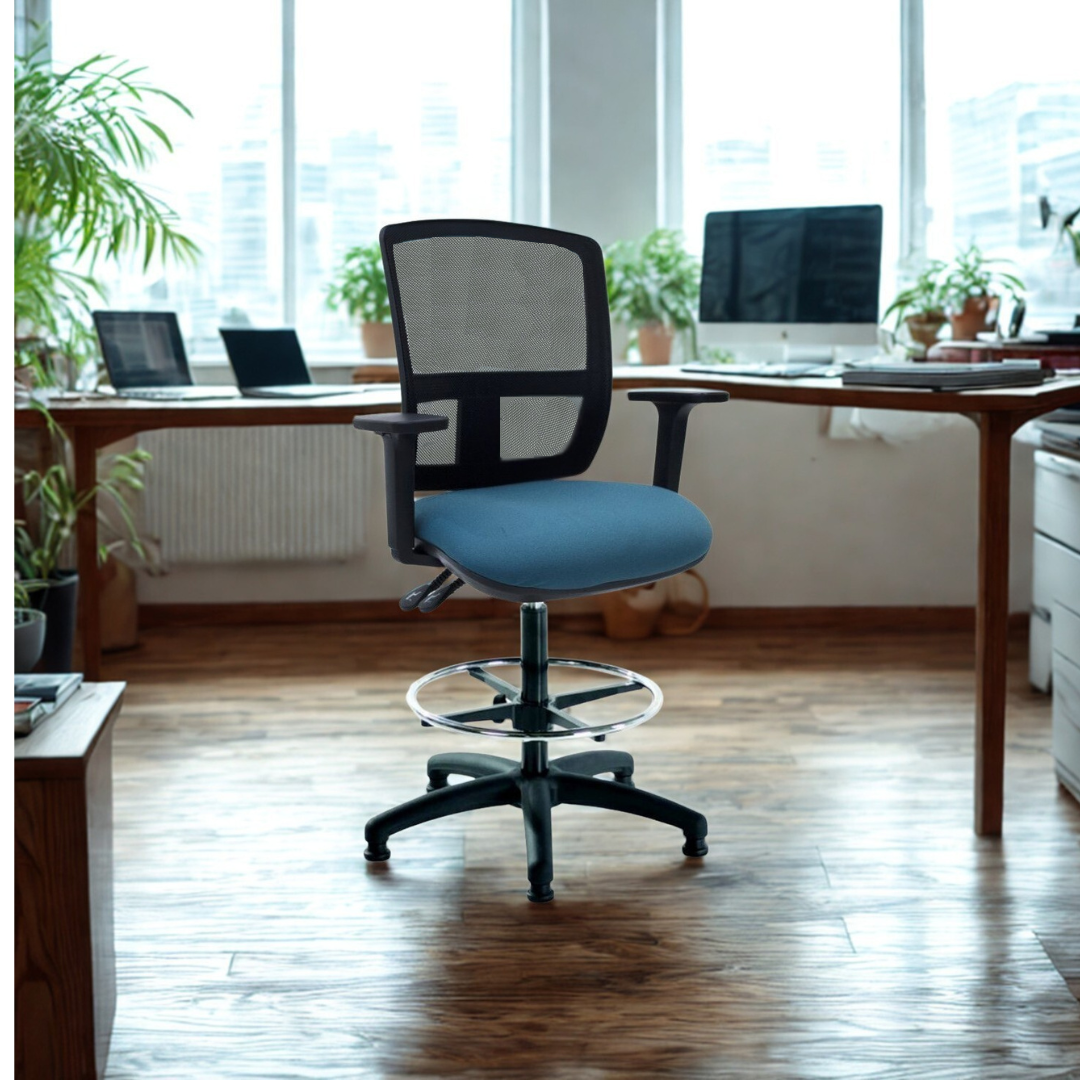
A common mistake is choosing a draughtsman chair simply because it looks substantial. Measure your worktop first. The chair must raise you high enough to work comfortably while still allowing your feet to rest securely on the foot ring.
A Simple Selection Checklist
Once you know what you need, ask these questions before making a purchase:
-
Where will the chair be used?
Standard office, home office, laboratory, factory or workshop? -
How high is the work surface?
Standard desks normally suit office chairs, while high worktops may require draughtsman chairs. -
What materials are appropriate?
Choose fabric or mesh for comfort and breathability, or polyurethane and vinyl where easy cleaning is important. -
Are there specific workplace hazards?
Consider ESD protection, chemicals, dust, moisture and hygiene requirements. -
How long will the chair be used each day?
Check the product’s stated usage rating and guarantee. -
Will more than one person use it?
If so, prioritise adjustability so different users can set the chair correctly. -
Can the chair be adapted later?
Options such as arms, seat slides, castors and glides can make a chair more suitable for changing needs.
The Best Support Comes From the Right Match
There is no universal winner in the comparison between industrial seating and ergonomic office chairs.
- Corporate offices: choose adjustable ergonomic office chairs.
- Home offices: choose comfortable office chairs with suitable long-duration support.
- Laboratories: consider draughtsman or lab chairs with easy-clean materials and the right height range.
- Factories and workshops: choose robust industrial seating matched to the environment and any safety requirements.
- Mixed workspaces: combine seating types to suit each workstation rather than using one chair everywhere.
But do not worry if your requirements are not straightforward. Chilli Seating offers a broad range of specialised industrial seating, ergonomic office chairs, draughtsman chairs and office furniture to help you create a more comfortable and productive workspace.
The right chair supports more than your back. It helps you work with greater comfort, confidence and efficiency throughout the day. By matching the chair to the task, environment and user, you can make a practical investment in long-term wellbeing and workplace performance.