

Choosing the right chair for an office is relatively straightforward: you look for comfort, style, and a bit of lumbar support. But when you step into a factory, a laboratory, or an electronics cleanroom, the rules of the game change completely.
Industrial seating isn't just about having a place to sit; it’s about safety, durability, and specialized functionality. If you’ve ever found yourself staring at a catalogue wondering why one chair is three times the price of another or what on earth an "ESD" rating is, you’re in the right place.
In this guide, we’re stripping away the jargon to give you a high-speed breakdown of the three heavy hitters in the industrial world: Draughtsman chairs, Factory chairs, and ESD safe chairs.
The High-Flyer: Draughtsman Chairs
If your work happens at an elevated surface: think laboratory benches, architectural drafting tables, or high-level retail counters: a standard office chair simply won’t reach. This is where the draughtsman chair comes in.

What makes it different?
The defining feature of a draughtsman chair is its extended gas lift. While a standard chair tops out at a height suitable for a 72cm desk, a draughtsman chair can soar much higher, often reaching seat heights of 80cm or more.
But don't worry about your legs dangling! These chairs are almost always equipped with a foot ring. This circular metal ring provides a stable place to rest your feet, preventing the "pins and needles" sensation caused by restricted blood flow in the thighs.
Best for:
- Designers & Architects: Working at large-scale drafting boards.
- Lab Technicians: Navigating high-bench equipment.
- Retail Staff: Staying at eye-level with customers while seated.
For a deeper dive into how these differ from your typical desk setup, check out our guide on draughtsman chairs vs. regular office chairs.
The Bulletproof Choice: Factory Chairs
In a production line or workshop, a fabric chair is a recipe for disaster. Spills, grease, metal shavings, and heavy-duty wear will ruin standard upholstery in weeks. That’s why factory chairs (often referred to as polyurethane or "PU" chairs) are the gold standard for industrial environments.

Why Polyurethane?
Polyurethane is a high-density, tough-as-nails material that offers the comfort of foam with the durability of plastic. It is:
- Washable: You can literally wipe it down with industrial cleaners without damaging the surface.
- Chemical Resistant: It stands up to oils, mild acids, and workshop grime.
- Puncture Proof: It won't snag or tear like fabric or vinyl when poked by tools or sharp components.
When you’re choosing the right factory chair, you aren't just buying furniture; you're buying a tool that needs to withstand an 8-hour shift in a punishing environment.
Best for:
- Assembly Lines: Where speed and repetitive movement are key.
- Workshops: Where oil, grease, and debris are part of the job.
- Food Prep: Areas requiring strict hygiene and frequent wash-downs.
The Invisible Shield: ESD Safe Chairs
In the world of electronics manufacturing, static electricity is the enemy. A tiny, invisible spark from your body can fry a thousand-pound circuit board in a millisecond. This is why ESD safe chairs (Electro-Static Discharge) are non-negotiable in cleanrooms and tech labs.
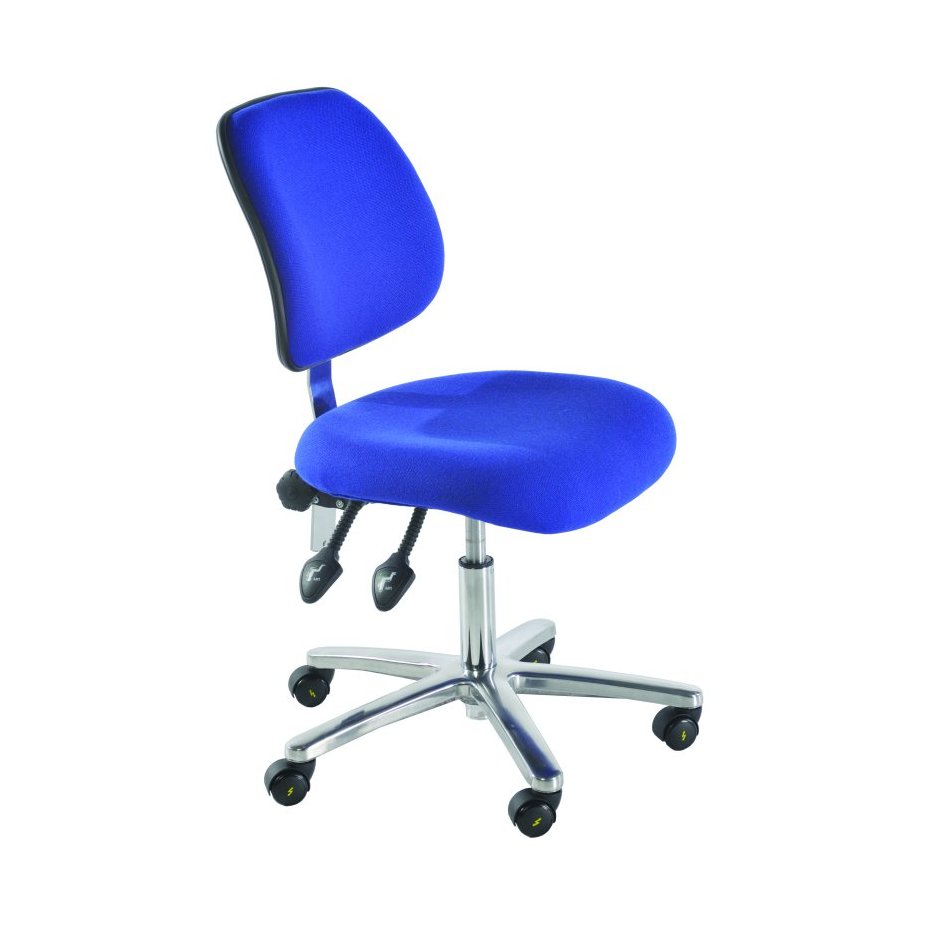
How do they work?
An ESD safe chair is engineered to be a "grounding path." Every component: from the specialized fabric or vinyl with carbon fibres to the conductive castors: is designed to take any static charge on your body and bleed it safely into the floor.
Key Features of ESD Seating:
- Conductive Upholstery: Contains microscopic conductive threads.
- Grounding Chains or Straps: Ensuring the chair stays in contact with the ESD-compliant flooring.
- Certified Standards: Look for chairs that meet IEC 61340-5-1 or ANSI/ESD S20.20 standards to ensure they actually do what they claim.
Before you invest, make sure you know the top features to look for in lab chairs to ensure you're getting the protection your equipment needs.
Anatomy of Industrial Seating: The Details That Matter
Once you've picked your chair type, you need to look at the "feet" and the "rest." This is where many businesses make a mistake that affects both safety and productivity.

Glides vs. Castors
- Castors (Wheels): Great for mobility. If you need to scoot between three different machines, you want castors. However, on high draughtsman chairs, wheels can be dangerous. Imagine trying to climb onto a high chair and having it roll away from you: not fun.
- Glides (Fixed Feet): These are flat, non-rolling feet. They are the preferred choice for high-rise seating because they keep the chair anchored while you mount and dismount. If you want the "best of both worlds," look for load-braked castors, which lock the wheels when you sit down.
The Importance of the Foot Ring
As mentioned earlier, the foot ring is your ergonomic lifeline. Without it, the weight of your legs pulls on your lower back and puts pressure on your thighs. When selecting a chair, ensure the foot ring is height-adjustable. This allows workers of different heights to find a neutral, comfortable posture where their knees are at roughly 90 degrees.
Industrial Seating: A Quick Comparison
| Feature | Draughtsman Chair | Factory (PU) Chair | ESD Safe Chair |
|---|---|---|---|
| Typical Height | High (Extended Gas Lift) | Standard or High | Any |
| Material | Fabric, Mesh, or Vinyl | Durable Polyurethane | Conductive Fabric/Vinyl |
| Environment | Labs, Studios, Retail | Workshops, Factories | Electronics, Cleanrooms |
| Primary Goal | Height Accessibility | Durability & Hygiene | Static Dissipation |
Summary: Finding Your Perfect Match
Before diving into the specifics of models and colors, ask yourself three simple questions:
- How high is the surface? If it's over 75cm, you need a draughtsman model with a foot ring.
- How messy is the job? If there's oil, water, or dust, go for polyurethane factory chairs.
- Is there sensitive tech? If you're handling PCBs or microchips, you must have an ESD safe chair.
In short, the right industrial seating isn't just about sitting: it's about creating a safe, productive, and comfortable environment for the people who keep your business moving. Whether you're kitting out a new lab or replacing worn-out workshop stools, prioritizing specialized seating is an investment that pays off in reduced fatigue, better health, and zero fried electronics.
Ready to upgrade? Explore our full range of industrial and specialist seating to find the perfect fit for your workspace.